Kartchner Caverns
Still growing, drop by drop
⏱ 2-3 hours👤 All ages$$
Get Tickets
Get Kartchner Caverns Tickets
Skip the line · mobile tickets accepted at the door
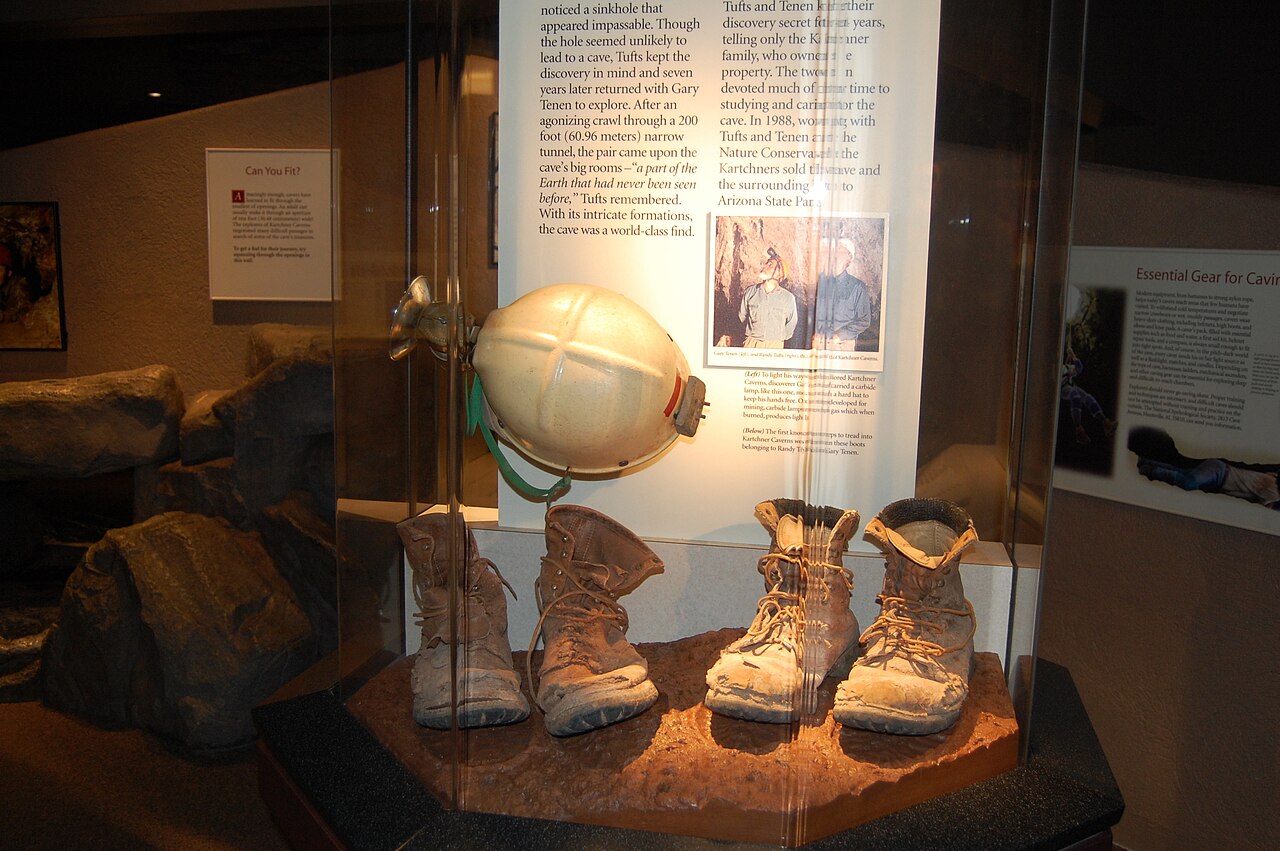
The discovery-and-secrecy story is the cave's founding ethic: Gary Tenen and Randy Tufts squeezed through a grapefruit-sized blowhole in the Whetstone Mountains' limestone in 1974, recognized a pristine living cave — and, having seen what publicity did to unprotected caves, told almost no one for years, eventually working with the Kartchner family and then Arizona State Parks in cloak-and-dagger negotiations (code names, midnight meetings) to ensure the cave would be developed right or not at all. The fourteen-year secret became the state park's design brief: tunnel entrances with double airlocks and misting systems to preserve humidity, trails poured with minimal footprint, lint and skin-oil protocols (the tours' no-touching rule is enforced like a medical procedure, because it is one), and monitoring that treats the cave as the patient it is.
What the protection preserves outclasses most show caves' wildest sections: Kartchner is wet and active — the formations glisten, drip, and grow in visible real time — and its signatures run world-class: Kubla Khan, the five-story column whose finale presentation (lights rising through the Throne Room with music) is the Southwest's answer to Luray's organ; the 21-foot soda straw in the Throne Room's ceiling, among the longest known anywhere; the Big Room's fried-egg stalagmites, turnip shields, and birdsnest needle quartz; and the bacon-and-drapery galleries still translucent because no torch soot ever touched them. The Big Room doubles as a maternity roost — summer closes it while cave myotis bats raise pups, the scheduling quirk that marks the park's priorities — and ranger narration carries the science with Arizona pride.
Practicalities: book ahead always — tours run small-group and timed, Arizona's demand fills them (reserve online with the trip; the Rotunda/Throne tour runs year-round, the Big Room roughly fall-through-spring between bat seasons), and photography is prohibited underground (the gift shop's images are the compensation; the memory does the rest). The park adds a discovery center, hummingbird gardens, and Whetstone trails; Tucson sits under an hour northwest (this market's Arizona Inn anchor), Bisbee and Tombstone fill the territorial-history day around it. It is the connoisseur's pick of the thirteen — the cave where the category's future is being done right — and the single best answer to anyone who thinks show caves are museums of dead rock.
What to Expect
Format
The pristine living cave — airlock entries holding 99% humidity, small-group tours past still-growing soda straws and the Kubla Khan column's finale, run to conservation standards with a no-touch, no-photo discipline. Reservations essentially required.
Best Time
Fall through spring offers both tours (the Big Room closes for summer bat maternity season); book online with the trip — Arizona fills the small groups.
Duration
Two to three hours with the discovery center.
Tips
Reserve ahead, always. Take both tours across a visit if dates allow — Throne Room year-round, Big Room in season. Hands stay off everything; the rule is the cave's life support. No photos below — buy the book, keep the memory.
⚡ Quick Picks
Best For
The connoisseur stop — the category's conservation masterpiece, glistening because it's still alive.
Families
Small groups and dramatic finales hold kids well; the no-touch rule is a teachable ethic with a five-story column as the reward.
Couples
Kubla Khan's light-and-music finale in a sixty-person chamber — the Southwest's most intimate spectacle.
Pair With
Tucson an hour northwest, Tombstone and Bisbee's territorial day around it.
Time Needed
Half a day from Tucson.
Ready to book Kartchner Caverns?
Get Tickets →Frequently Asked Questions
Why was it secret for fourteen years?
The discoverers had seen publicity ruin unprotected caves — they worked covertly with the landowners and state until protection was guaranteed. The secrecy became the park's design ethic.
What does "living cave" mean here?
Wet, active, growing — 99% humidity held by airlocks, formations glistening and building in real time, including one of the world's longest soda straws. Most show caves display the past; Kartchner displays the process.
Why does the Big Room close in summer?
Bat maternity season — cave myotis raise pups there, and the park schedules around them. The Rotunda/Throne tour (and Kubla Khan's finale) runs year-round.
Why no photography?
Flash, lingering, and lens fiddling damage the experience and the throughput that protects the cave — the prohibition is part of the conservation design. The memory outperforms the phone anyway.
How far ahead should we book?
With the trip — small timed groups and Arizona demand fill schedules days-to-weeks out, holidays further. Walk-ups are the exception, not the plan.
More Cave Tour Attractions
Browse all →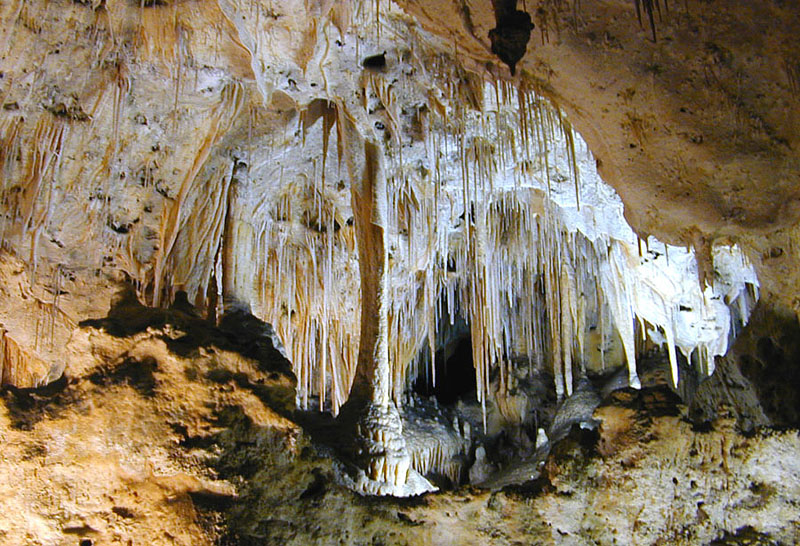
Carlsbad Caverns
The Big Room — the hemisphere's largest cave chamber, a quarter-mile-wide cathedral 750 feet under the New Mexico desert, entered down the bat-flight mouth or by elevator, with summer's dusk bat exodus as the free encore. The national benchmark.
Cave of the Winds Mountain Park
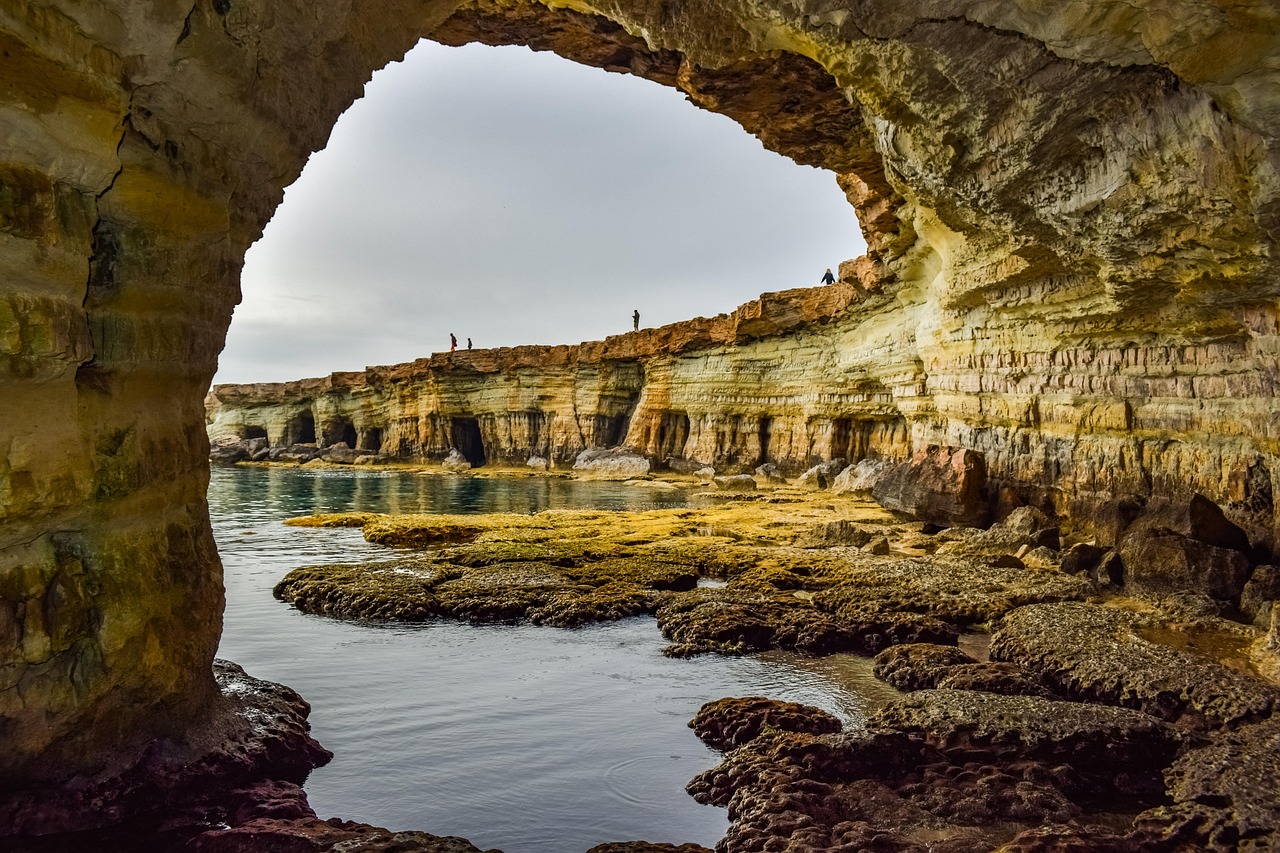
The canyon-rim classic beneath Pikes Peak — Colorado's veteran show cave since 1881, toured lit or by candlelit lantern, wrapped in a mountain park whose canyon-edge rides dangle thrill-seekers over a 600-foot drop. Underground and over it, one stop.
Natural Bridge Caverns
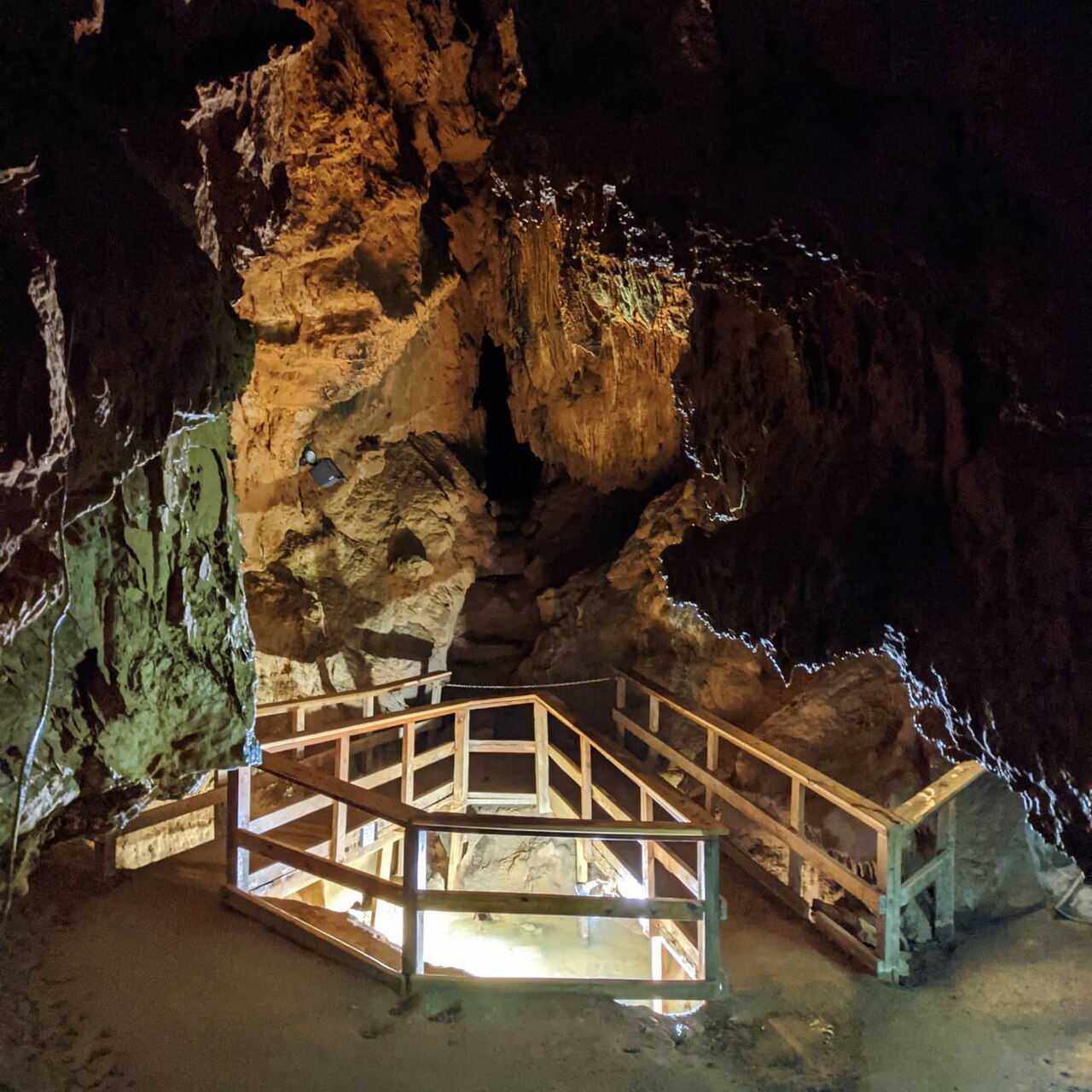
Texas's showpiece, still family-run — discovered by four college students in 1960 under a limestone bridge, now the state's largest show cave: half a mile of massive wet chambers, lantern and crawl tours, and a surface adventure park bolted on.